
What Every Home Seller Needs to Know About Appraisals

What Every Home Seller Needs to Know About Appraisals And How to Protect Your Sale Price
Selling your home in Fairfax Station, VA | Appraisals, contingencies, and what sellers need to know
If you're preparing to sell your home in Fairfax Station or anywhere in Northern Virginia, there's one step between signing a contract and sitting at the closing table that can make or break your deal: the home appraisal.
Sellers often focus on price. But understanding how appraisals work and how to strategically prepare for them is just as important as the number on the offer.
What Is a Home Appraisal?
A home appraisal is an independent, professional assessment of your property's market value. When a buyer is using any type of financing, conventional, FHA, VA, or otherwise, their lender requires an appraisal before approving the loan.
A licensed appraiser will evaluate:
- Recent comparable sales (homes similar to yours that have sold nearby)
- Your home's condition, both inside and out
- Square footage, layout, and features
- Current market trends in your area
The appraiser's job is to confirm that the home is worth what the buyer agreed to pay. The lender's job is to make sure they're not lending more than the property is worth.
The Golden Rule of Appraisals for Home Sellers
Here's what every seller needs to understand:
✅ If the appraisal comes in at or above the contract price → the deal moves forward as planned.
⚠️ If the appraisal comes in below the contract price → you have a problem.
Lenders will not finance more than the appraised value. Period. That gap between your contract price and the appraised value has to be resolved one way or another.
What Happens When a Home Doesn't Appraise?
A low appraisal doesn't automatically kill a deal, but it does create a negotiation. Here's how sellers typically navigate it:
1. Renegotiate the price. The seller agrees to reduce the price to meet the appraised value. This is the most common outcome.
2. The buyer covers the gap. Some buyers will pay the difference between the appraised value and the contract price out of pocket. This is known as an appraisal gap, and whether a buyer can or will do this depends entirely on their financial situation and the strength of their offer.
3. Challenge the appraisal. If comparable sales were missed or errors were made, your agent can submit a formal reconsideration of value with supporting data. This is not always successful, but it is an option worth pursuing.
4. The contract falls apart. If neither party can bridge the gap, the buyer can walk away and, depending on the contract terms, may do so without losing their earnest money deposit.
This is why appraisal risk is something every seller should evaluate before accepting an offer, not after.
Why Every Buyer Is Keeping the Appraisal Contingency Right Now
One of the most important shifts in today's market: buyers across all financing types are holding onto their appraisal contingencies and for good reason.
Even in competitive markets like Fairfax Station, VA, buyers are:
- More financially cautious than in previous years
- Hyper-aware of overpaying in a market with fluctuating values
- Advised by their agents and lenders to protect themselves against appraisal gaps
This isn't just a VA loan phenomenon. Conventional buyers, FHA buyers, and even some buyers with strong financial profiles are keeping appraisal contingencies in place because the risk of overpaying is real, and lenders are backing them up.
What this means for sellers: you cannot count on a buyer waiving this contingency, even in a multiple-offer situation. Offer strategy and pricing precision matter more than ever.
A Closer Look at VA Appraisals (Critical for Northern Virginia Sellers)
Given Fairfax Station's proximity to Fort Belvoir, the Pentagon, Quantico, and other military installations, VA buyers constitute a significant share of the buyer pool in this area. VA appraisals have a few unique characteristics that sellers need to understand.
VA Loans Are Strict About Value
The VA will only allow a buyer to finance up to the appraised value. There is no flexibility on this. If the appraisal comes in low, the buyer cannot simply choose to proceed with the original price; the loan won't be approved at that number.
The VA Appraisal Stays with the Property
This is a detail many sellers don't know: VA appraisals are tied to the property, not the buyer. If a VA appraisal is completed and a deal falls through, that appraised value can carry forward if a new VA buyer comes along within the validity period. You generally cannot simply reset and try again with a higher number.
Minimum Property Requirements (MPRs)
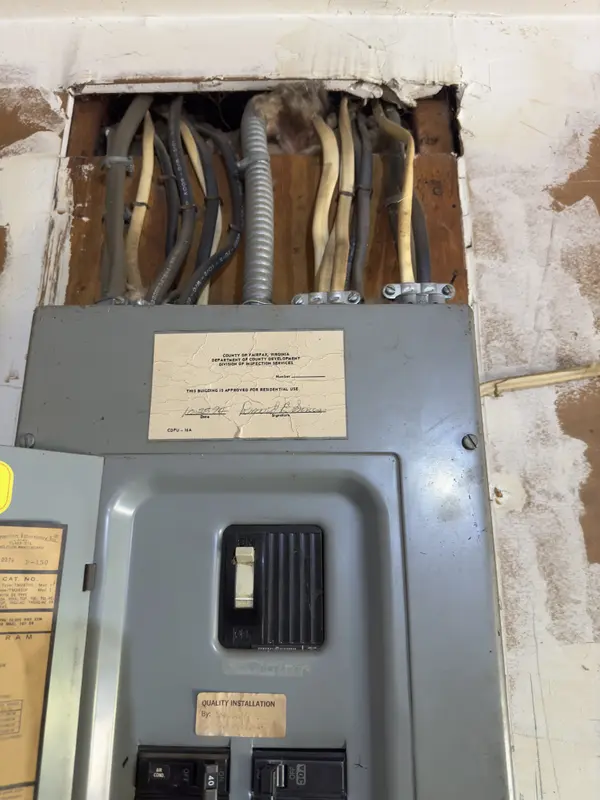
VA appraisers aren't just evaluating value, they're also assessing condition. If your home has issues such as peeling paint, exposed wiring, roof concerns, or safety hazards, they may need to be remediated before the loan can close. This makes pre-listing preparation especially important when VA buyers are likely.
VA Buyers Cannot Waive This Contingency
Because of the strict guidelines around both value and condition, VA buyers are essentially required to keep their appraisal contingency. It protects both the buyer and the integrity of their VA loan eligibility. Don't expect a VA buyer to waive it, and don't count against them for keeping it. VA loans have some of the strongest buyers out there because they are very well qualified.
What Sellers Often Overlook: The Appraiser's Perspective
Understanding how appraisers think can help you prepare more effectively. A few things sellers often don't realize:
Appraisers are working backward from the data. They pull recent comparable sales, typically within the last 3 to 6 months, and adjust for differences between those homes and yours. If inventory has been low or comps are limited, the appraiser may have to reach further geographically or further back in time, which can affect the outcome.
Condition directly impacts value. Deferred maintenance, dated finishes, and cosmetic issues can result in downward adjustments. The appraiser isn't just looking at square footage; they're evaluating the home's overall marketability.
Permits matter. Unpermitted additions or improvements can be a problem. If work was done without a permit, an appraiser may exclude that square footage from the value calculation or flag it entirely.
First impressions count. Appraisers are human. A clean, well-maintained, well-presented home signals that it has been cared for, and that shows up in their assessment.
How Strategic Pricing Protects Sellers
One of the most effective ways to protect against appraisal issues is to price your home correctly from the start.
Overpricing in hopes of negotiating down is a strategy that frequently backfires. Here's why:
- Overpriced homes sit longer, which raises red flags for buyers and appraisers alike
- The longer a home sits, the more leverage buyers gain, including on appraisal gaps
- If the home goes under contract at an inflated price, the appraisal is more likely to come in short
Pricing at or just above where the comps support gives you the best chance of a clean appraisal with no gap to navigate.
My Job as Your Listing Agent: Making Sure Your Home Appraises
Negotiating the contract is only part of what I do. A significant portion of my work as your listing agent is making sure your home is positioned to support its value at appraisal, not just at offer.
Here's how I approach it:
Before we list:
- I conduct a thorough comparable sales analysis to identify where appraisal risk exists and price strategically
- I walk the home with an eye toward condition issues that could trigger appraiser flags
- I advise on cost-effective improvements that strengthen perceived and appraised value
When offers come in:
- I analyze each offer for appraisal risk, not just purchase price
- I evaluate whether buyers have included an appraisal gap clause and what their capacity is to cover a shortfall
- I help you compare overall offer strength, not just the number at the top
If a low appraisal comes in:
- I immediately review the report for errors or missed comparable sales
- I built a case for reconsideration of value where the data supports it
- I negotiate on your behalf to get you to the closing table on the best possible terms
The goal is to avoid surprises and, when they happen, to respond with strategy, not panic.
The Bottom Line for Sellers
The appraisal isn't a formality. It's a gatekeeping step that every financed transaction has to pass through, and in today's market, it deserves serious attention from day one.
Understanding how appraisals work, what buyers and lenders are looking for, and where risk lives in your transaction puts you in a position of strength as a seller.
You don't have to navigate it alone.
Ready to See What Your Home Is Worth?
Understanding your home's value is the first step to a successful sale, and knowing where your price stands relative to recent comps is exactly how we stay ahead of appraisal risk from day one.
Get your free home valuation and let's start building your selling strategy.
👉 Request Your Free Home Valuation →
Savvy strategies. Expert guidance. Proven results. List with Kristin.
Serving sellers in Lorton, Fairfax Station, Alexandria, Burke, Springfield, and throughout Northern Virginia.
Categories
Recent Posts








WHAT DO YOU THINK?
LEAVE ME A MESSAGE: